
Every lifter asks the same question at some point: “Is this weight good, or am I behind?” Raw numbers on a barbell don’t mean much on their own. A 225-pound bench press is impressive for one person and simply a warm-up for another, depending on bodyweight, training age, and sex. That’s exactly the gap a strength level calculator is built to close.
Instead of guessing or comparing yourself to random gym-goers, a strength standard tool measures your lift against data pulled from thousands of real lifters. It gives you a rating — from beginner to elite — so you know exactly where you stand and what it takes to move up a level.
What Is a Strength Level Calculator?
A strength level calculator is a tool that ranks your lift based on your bodyweight, sex, and the amount of weight lifted. Rather than judging performance in isolation, it places your number inside a scale of strength standards that reflect how an average population of lifters actually performs.
Most tools use categories like:
- Beginner – You’ve just started training with barbells.
- Novice – A few months of consistent training under your belt.
- Intermediate – Solid technique with a year or more of progressive training.
- Advanced – Strength that stands out even in a serious gym.
- Elite – Competitive powerlifting or strongman territory.
These strength standards aren’t arbitrary. They’re built from large datasets of lifting performance across different bodyweight classes, which is why bodyweight adjustment matters so much in an accurate strength rating.
Why Bodyweight Changes Everything
Strength doesn’t scale in a straight line with bodyweight, but it does scale. A 140-pound lifter squatting 225 pounds is doing something very different from a 220-pound lifter squatting the same number. This is why raw lift totals are a poor way to compare two people, and why any serious strength level calculator factors in bodyweight before assigning a rating.
This is closely related to relative strength — your strength measured against your own bodyweight, rather than as an absolute number. Relative strength is often a better predictor of athletic performance, body composition, and even injury resilience than raw lifting numbers alone.
If you’ve ever used a bodyweight ratio chart to compare your squat, bench, or deadlift to your weight, you’re already thinking in the same terms a strength calculator uses — just with more precision and adjustment for sex and experience level.
Why Sex-Based Standards Matter

Strength standards differ between men and women due to physiological factors like muscle mass distribution, hormonal profiles, and average bodyweight. A calculator that doesn’t separate these will give inaccurate ratings for one group or the other.
That’s why reliable strength level tools always ask for sex as an input. It ensures the comparison pool is relevant, so a female lifter isn’t compared against male averages and vice versa. This keeps the rating meaningful instead of misleading.
How Training Age Affects Your Rating
Training age — how long you’ve been lifting with intent and consistency — plays a major role in where you land on the strength scale. A beginner with six months of training will naturally rank differently than someone with five years of progressive overload behind them, even at the same bodyweight.
This is one reason strength gains slow down over time. Early lifters often see rapid jumps in strength thanks to neuromuscular adaptation — the body getting more efficient at recruiting muscle fibers — before hypertrophy and long-term strength training become the primary drivers of progress.
Understanding this helps set realistic expectations. Jumping from novice to intermediate might take months, but intermediate to advanced can take years of dedicated progressive overload, proper periodization, and recovery.
The Big Three Lifts and What They Reveal
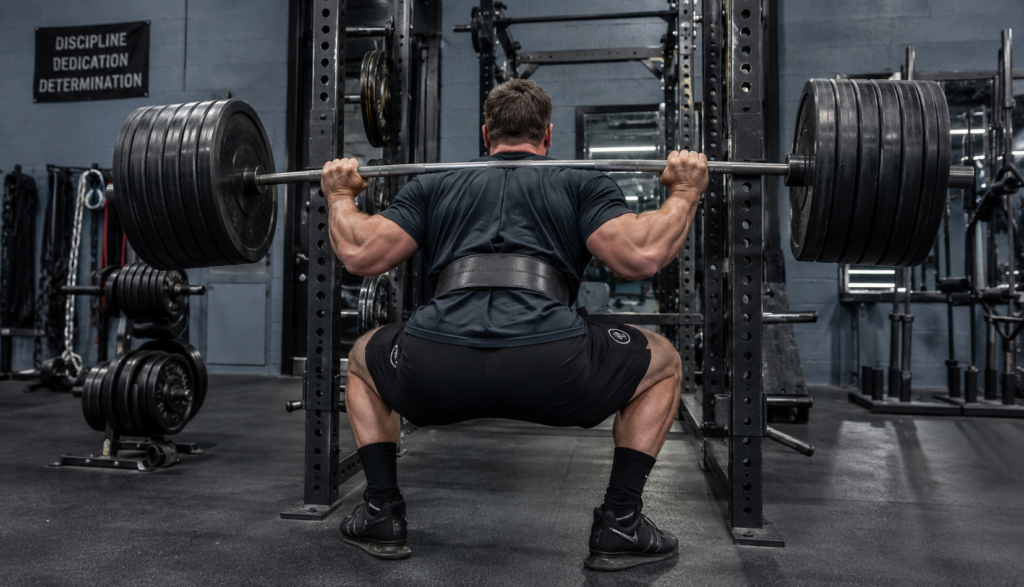
Strength level calculators typically focus on the squat, bench press, and deadlift — often called the big three in powerlifting and general strength training. Each lift tests different muscle groups and movement patterns:
- Squat – Lower body strength, especially quads, glutes, and core stability.
- Bench Press – Upper body pressing strength through chest, shoulders, and triceps.
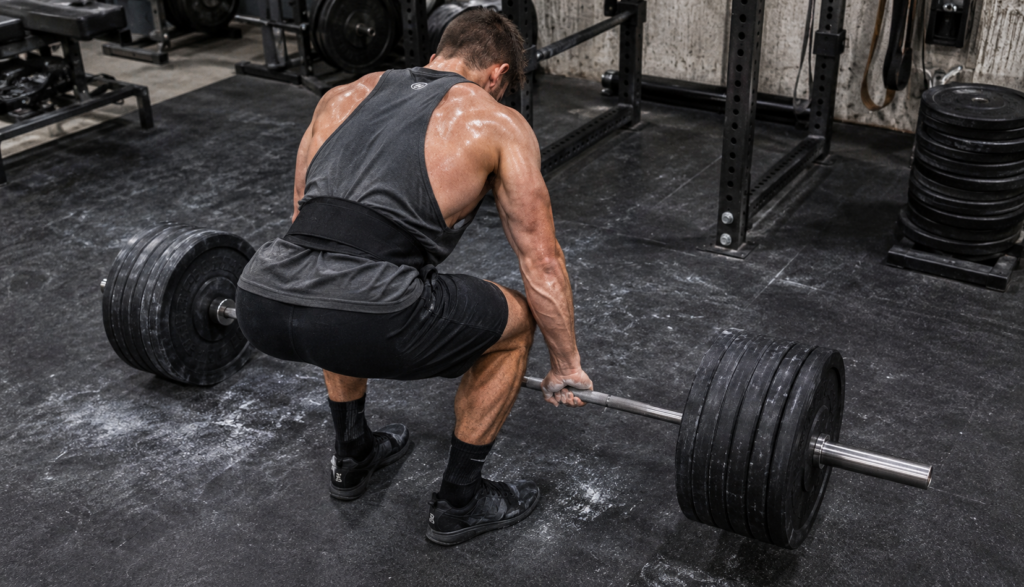
- Deadlift – Full posterior chain strength, including hamstrings, glutes, and back.
Some calculators also include the overhead press as a fourth lift, since it isolates shoulder and core strength in a way the other three don’t fully capture.
Looking at all three lifts together, rather than just one, gives a more complete picture of overall strength and can highlight imbalances worth addressing in a training program.
How to Use a Strength Level Calculator
Using a strength standards tool is straightforward:
- Enter your bodyweight in pounds or kilograms.
- Select your sex for accurate comparison data.
- Input the weight lifted for a specific exercise, such as your squat or bench max.
- Get your strength rating instantly, based on where that lift falls among the standards.
Many tools also let you check multiple lifts side by side, which helps identify whether your strength is balanced across major movement patterns or concentrated in one area.
Common Myths About Strength Standards
Myth: Strength standards are the same for everyone. Reality: Standards shift with bodyweight, sex, and training age. A single fixed number for “a good bench press” doesn’t hold up across different lifters.
Myth: If you’re not advanced, you’re not strong. Reality: Intermediate strength already puts you ahead of most gym-goers. These categories describe a spectrum, not a pass/fail test.
Myth: Strength ratings measure athletic ability. Reality: A strength calculator measures barbell performance, not sport-specific skill, mobility, or conditioning. It’s one piece of the fitness puzzle, not the whole picture.
Myth: You should compare yourself to elite lifters. Reality: Elite standards represent years of specialized training, often with genetic and competitive advantages. Progress should be measured against your own history first.
Why Tracking Strength Level Matters
Checking your strength rating periodically — every few months, not every session — gives you a clear signal of whether your program is working. It’s a more objective marker than how a workout “felt,” and it helps confirm that progressive overload is actually happening over time.
It also helps set realistic short-term goals. Instead of chasing an arbitrary number, you can aim to move from one strength category to the next, which feels more achievable and keeps motivation steady during long training blocks.
For anyone serious about strength training, running your numbers through a calculator built around real strength standards takes the guesswork out of the process and replaces it with a clear, data-backed answer.
Final Thoughts
A strength level calculator turns a vague question — “Am I strong?” — into a precise, useful answer. By factoring in bodyweight, sex, and training age, it places your lifts in proper context and shows exactly where you stand, from beginner through elite. Whether you’re chasing your first novice rating or pushing toward advanced status, knowing your current strength level is one of the simplest ways to train with purpose and measure real progress.