
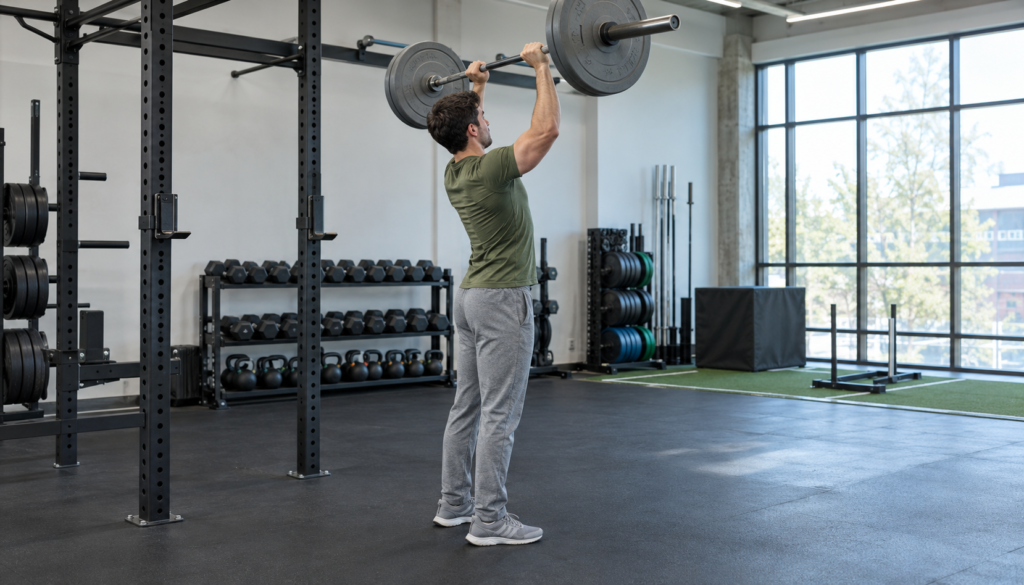
The overhead press is one of the hardest lifts to move up. Your shoulders, triceps, and core all have to work together, and you get no help from your legs or a bench. So when you ask what a good overhead press weight is, the honest answer is usually lower than you expect. This guide gives you clear numbers for beginner, novice, intermediate, advanced, and elite lifters, shows how bodyweight changes your target, and explains how to find your own one rep max. By the end, you will know where you stand and what to aim for next.
What Counts as a Good Overhead Press Weight?
A good overhead press weight is one that matches your bodyweight, your training age, and your goals. No single number fits everyone, but there are reliable benchmarks. Most strength standards use bodyweight as the yardstick, because a heavier lifter usually has more muscle to press with.
For a standing barbell strict press, also called the military press, these reference points are common for men:
- Pressing the empty bar (45 pounds or 20 kilograms) is a solid first milestone.
- Pressing around 0.8 times your bodyweight puts you in the intermediate range.
- Pressing your full bodyweight or more is advanced by most strength level charts.
These numbers assume a strict press, meaning no leg drive and no leaning back. A push press lets you move more weight, but it is a different lift and should not be compared to the standards below.
Overhead Press Standards by Bodyweight
The table below shows approximate overhead press standards as a multiple of bodyweight. Think of these as a guide, not a rule. Different strength standards sources vary slightly, but they all land in the same general range.
| Level | Men (x bodyweight) | Women (x bodyweight) |
|---|---|---|
| Beginner | 0.35 | 0.20 |
| Novice | 0.55 | 0.35 |
| Intermediate | 0.80 | 0.50 |
| Advanced | 1.05 | 0.70 |
| Elite | 1.30 | 0.95 |
Example: A 180-Pound Man
At a bodyweight of 180 pounds (82 kilograms), the standards work out to roughly these one rep max numbers.
| Level | Pounds | Kilograms |
|---|---|---|
| Beginner | 65 | 29 |
| Novice | 100 | 45 |
| Intermediate | 145 | 66 |
| Advanced | 190 | 86 |
| Elite | 235 | 107 |
Example: A 140-Pound Woman
At a bodyweight of 140 pounds (64 kilograms), the same method gives these targets.
| Level | Pounds | Kilograms |
|---|---|---|
| Beginner | 30 | 14 |
| Novice | 50 | 23 |
| Intermediate | 70 | 32 |
| Advanced | 100 | 45 |
| Elite | 135 | 61 |
Notice how much lower these numbers are than what you may see for the squat or deadlift. That is normal. The overhead press uses a smaller group of muscles, so even a lifter with years of training age may only press a little over bodyweight.
Good Overhead Press Weight for Beginners
If you are new to strength training, a good overhead press weight is simply the weight you can move with proper form for three sets of five to eight reps. For many beginners, that means starting with the empty barbell, or even lighter dumbbells, and building from there.
Beginners usually progress fastest in the first few months. Add 5 pounds when every rep feels smooth, then switch to 2.5-pound jumps once progress slows. Many lifters reach half their bodyweight on the press within their first year of steady training. If you are well below that, do not worry. Consistent practice, good sleep, and enough food matter more than any number on the bar.
Does a Good Overhead Press Weight Differ for Men and Women?
Yes, but the gap is mostly about muscle mass, especially in the upper body. Men typically carry more muscle in the shoulders and triceps, so the standards for men sit higher as a multiple of bodyweight. Women often make steady gains and can progress just as quickly in percentage terms.
What matters most is how you compare to your own past numbers. A woman who moves from 45 to 65 pounds on the press has made the same kind of progress as a man who moves from 95 to 135.
How to Find Your Overhead Press One Rep Max
Your one rep max, often written as 1RM, is the heaviest weight you can press for a single clean rep. You do not need to test it directly. A heavy set of three to five reps gives you a safe estimate, and the Epley formula turns it into a number:
1RM = weight x (1 + reps / 30)
For example, if you press 95 pounds for 5 reps, your estimated max is 95 x (1 + 5/30), which is about 111 pounds. You can skip the math and use a one rep max calculator, then compare the result with a strength level calculator to see which tier you fall in. Both tools on CalcLifting take bodyweight and reps and give you an answer in seconds.
If you do test a true max, use a rack with safety pins, warm up with several lighter sets, and ask someone to spot you.
Why Is the Overhead Press So Much Lower Than the Bench Press?
The average lifter presses far less overhead than they bench. A common rule of thumb is that your overhead press lands around 60 to 70 percent of your bench press. There are a few reasons for this.
On the bench press, your chest, shoulders, and triceps share the load, and the bench supports your back. Overhead, the front deltoids and triceps do most of the work, while your core and glutes have to stay tight to keep your torso steady. You also press the bar through a longer path against gravity with a smaller base of support. If your press is less than 60 percent of your bench, your shoulders are likely a weak point worth training.
What Affects How Much You Can Overhead Press?
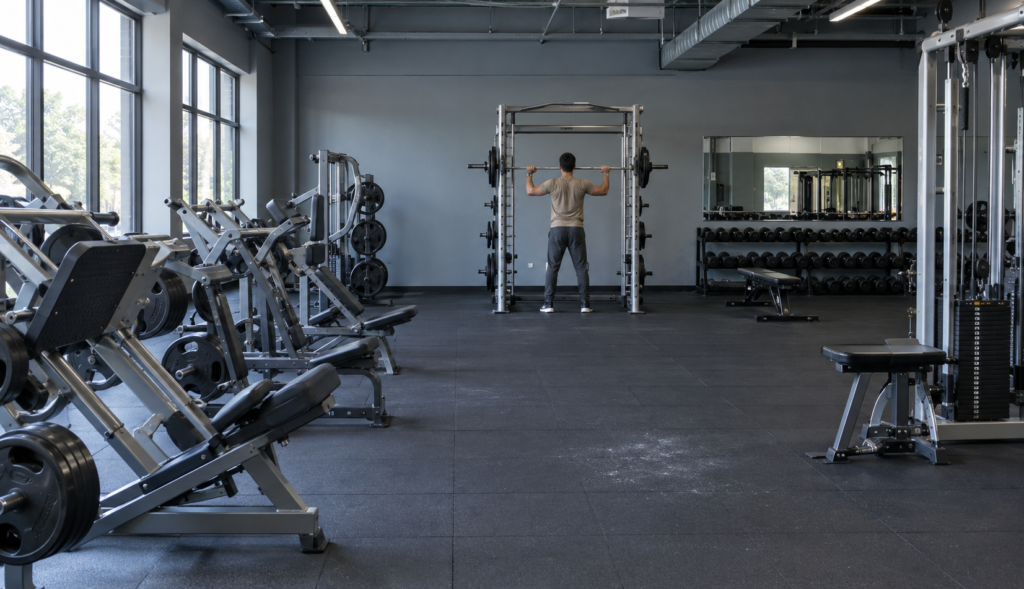
Several factors decide where you land, and some are outside your control.
Bodyweight and Training Age
A heavier lifter generally presses more, and someone with five years of training age will beat someone with five months. Standards by bodyweight account for the first factor, while your training history explains the second.
Limb Length and Mobility
Longer arms mean a longer press path, which makes the same weight feel harder. Poor shoulder mobility or a stiff thoracic spine can also block a clean lockout overhead. If the bar drifts forward, work on mobility before you chase heavier weight.
Core Strength and Bracing
A strong brace lets you transfer force from the floor through your torso to the bar. Squeeze your glutes, tighten your abs, keep your upper back tight, and keep your ribs down. A loose midsection leaks power and often leads to leaning back.
How to Increase Your Overhead Press Weight
Progression on the press is slow, so patience and smart planning count. These steps work for most lifters.
Use Progressive Overload With Small Jumps
Progressive overload is the engine of all strength training. On the overhead press, standard 5-pound jumps get hard quickly. Fractional plates let you add 1 pound or even half a pound at a time. This kind of micro-loading keeps you moving up when bigger jumps stall.
Add Accessory Work
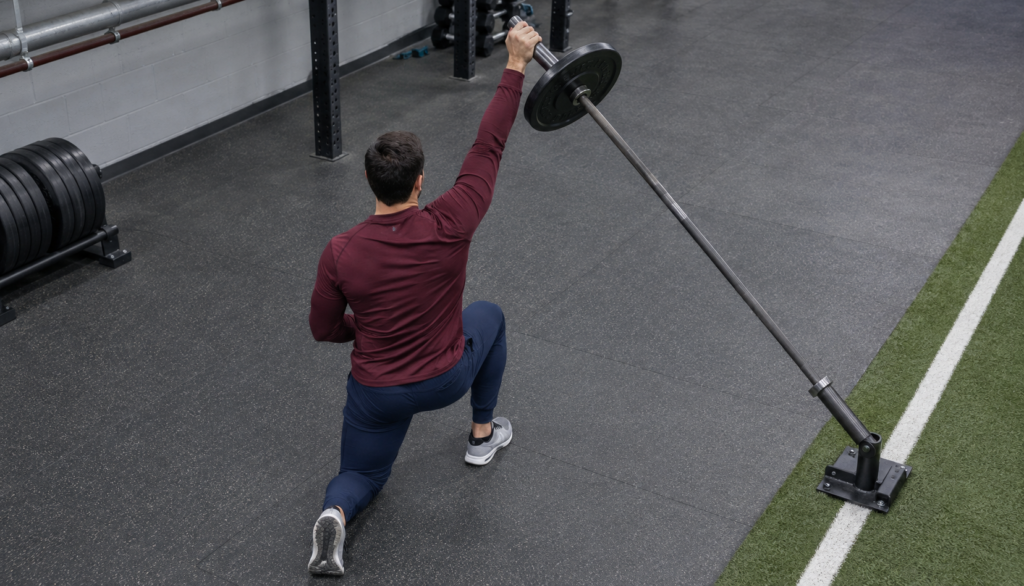
Build the muscles behind the lift. A dumbbell shoulder press builds each side evenly, the landmine press is easy on the joints, lateral raises hit the side delts, and dips and close-grip bench press grow the triceps. Add face pulls or external rotations to keep your rotator cuff healthy.
Eat, Sleep, and Recover
You get stronger during recovery, not during the set. Eat enough protein and calories, sleep seven to nine hours, and take a deload week every so often if your numbers stall or your shoulders feel sore. Powerlifting coaches use this same approach to keep joints healthy over long training blocks.
Warm Up Before You Press
A good warm-up prepares your shoulders and makes the first working set feel lighter. Start with arm circles and band pull-aparts, then do two or three light sets of the press with just the bar before you load heavier weight plates.
Is Pressing Your Bodyweight Overhead Realistic?
For most men, yes, but it takes time. Reaching a bodyweight press often takes several years of focused training, and many lifters never chase it because their goals lie elsewhere. For women, a bodyweight press is rare and sits near the elite range. If you are working toward it, break the goal into smaller steps. Aim for 0.5 times bodyweight first, then 0.75, and only then think about 1.0. Each step is a real win, and each one also protects your shoulders by giving your joints time to adapt.
Set a Target That Fits You
A good overhead press weight is relative. For a new lifter, it may be the empty bar. For an intermediate lifter, it is around 0.8 times bodyweight for men or half of bodyweight for women. Find your one rep max, check it against the standards above, pick the next level, and build toward it with small, steady increases. Track your sets and reps each week, and let the numbers show you the progress your mirror may hide.