

Most lifters know they should take a deload week at some point. Far fewer know when. Deload too rarely and fatigue piles up until your lifts stall or a joint starts to hurt. Deload too often and you throw away weeks of productive training. The right answer depends on how hard you train, how long you have been lifting, and how well you recover between workouts.
This guide gives you a clear starting point for how often to deload, then shows you how to adjust that number for your own training. A deload is simply a planned, short drop in training stress. Here, the only question is timing.
The Short Answer: Every 4 to 8 Weeks
For most lifters, the best deload frequency is one deload week every 4 to 8 weeks of hard training. That range works because fatigue builds slowly. You may feel great for the first few weeks of a training block, then notice your performance flattening even though you are eating and sleeping well. A planned deload clears that built-up fatigue so your muscles, joints, and nervous system can catch up with the work you have done.
If you want one number to start with, use every 6 weeks. Train hard for five weeks, take the sixth week lighter, and see how you feel afterward. Then move the number up or down based on how your lifts respond. Treat it as a default that you test, not a rule you follow blindly.
How Often to Deload Based on Training Experience
Your training age matters more than your birthday. The longer you have lifted, the heavier the weights you move, and the more each session costs your body. That is why the answer to “how often should you deload” changes as you progress.
Beginners: Every 8 to 12 Weeks, or Less Often
New lifters recover quickly because they lift lighter weights and add load slowly. A beginner squatting 135 pounds simply cannot create the same fatigue as an advanced lifter squatting 500. Most beginners can go 8 to 12 weeks between deloads, and many go longer without any problem.
Popular linear progression programs like StrongLifts 5×5 handle this by lowering the weight after repeated missed reps instead of using a fixed date. If you feel strong and your numbers keep rising every week, you probably do not need a deload yet.
Intermediate Lifters: Every 5 to 8 Weeks
Intermediate lifters usually progress from week to week or month to month instead of from session to session. Loads are heavier and weekly volume is higher, so fatigue collects faster. Most intermediates do well with a deload every 5 to 8 weeks, often at the end of a training block or mesocycle. If you follow a structured periodization plan, the deload tends to fall naturally between blocks.
Advanced Lifters: Every 3 to 6 Weeks
Advanced lifters train close to their limits, so they recover more slowly relative to the weight they move. Many deload every 3 to 5 weeks, and some take a lighter week after every accumulation phase. Progress is slow at this level, so protecting your joints and connective tissue matters just as much as protecting your strength.
What Changes Your Deload Frequency

The ranges above are starting points. Several factors push your ideal deload frequency toward the shorter or longer end.
Training Volume and Intensity
Heavy sets taken near failure drain you faster than moderate sets with reps left in reserve. If most of your work sits at RPE 9 or 10 (rate of perceived exertion, a 1 to 10 scale of how hard a set felt), expect to need a deload sooner. If most of your work sits at RPE 6 to 8, you can often stretch the gap by a few weeks.
Volume works the same way. A program that adds sets every week raises fatigue with each training week, so it calls for a deload sooner than a program that holds volume steady.
Sleep, Stress, and Nutrition
Recovery is not only about the gym. Poor sleep quality, a stressful job, and a calorie deficit all shrink your recovery capacity. During a cut, many lifters find they need a deload a little sooner, because lower energy intake slows repair. Lifters who sleep eight hours and eat at maintenance or in a surplus can usually go longer between deloads.
Age and Recovery Capacity
Recovery tends to slow with age, so lifters in their 40s and beyond often land on the shorter end of each range. That is not a weakness. It is a practical way to keep lifting consistently for years instead of forcing progress and losing months to injury.
Fixed Schedule vs. Autoregulated Deloads
There are two ways to decide when to deload, and each has a place.
A fixed schedule puts a deload every set number of weeks, such as every sixth week. It is simple, it removes guesswork, and it suits beginners and intermediates who like structure. The weakness is that your body does not follow a calendar. Sometimes you feel fresh at week six, and the deload just interrupts your momentum.
Autoregulation uses your own data instead. You deload when your training tells you it is time: bar speed slows, your estimated 1RM drops across two sessions, or your RPE climbs on weights that used to feel easy. This approach fits experienced lifters best, since they know how their bodies respond.
For most people, a hybrid works best. Set a planned deload every 6 weeks as a ceiling, then pull it forward if your numbers dip early. To track your progress, write your top sets in a training log and run them through a one rep max calculator each week. A falling estimated 1RM across two weeks is worth paying attention to.
Deload Frequency by Training Style
Your goal changes how much fatigue you create, and that changes how often you need to back off.
Powerlifting
Powerlifting relies on very heavy singles, doubles, and triples, which place a high demand on the nervous system. Most powerlifters deload every 4 to 6 weeks, and they also taper before a meet. Because barbell work at high intensity drains you quickly, waiting too long here usually shows up as a stalled squat, bench, or deadlift.
Bodybuilding and Hypertrophy Training
Bodybuilding uses higher reps and more total sets, which taxes muscle tissue and joints across the week. Most hypertrophy lifters deload every 6 to 8 weeks. Since muscle growth depends on steady volume, you want to protect those productive weeks and avoid taking rest weeks you do not need.
General Strength and Fitness Training
If you train three or four days a week for general strength and health, you likely create less total fatigue than a competitor. Every 8 weeks or so is a reasonable schedule, and some people in this group never need a formal deload because their normal week is easy enough to recover from.
Can You Deload Too Often?
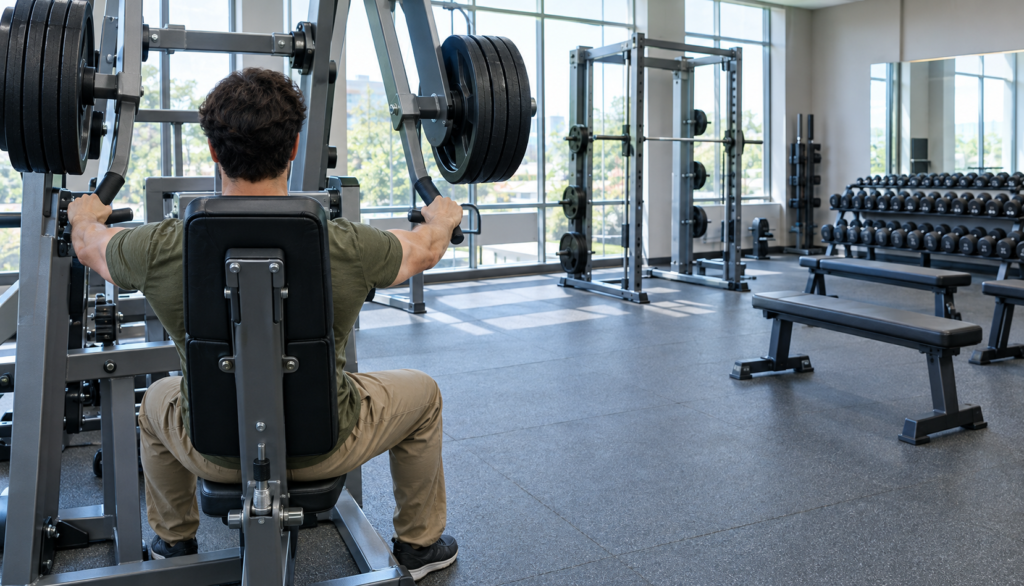
Yes. Deloading every 2 or 3 weeks cuts into progressive overload. You need enough hard weeks in a row to give your body a reason to get stronger. If you feel like you need a deload that often, the problem is usually somewhere else: too much volume, too little sleep, or too little food. Fix the cause first, and only then adjust your deload frequency.
Can You Go Too Long Without a Deload?
Also yes, though the damage is slower. Going 12 weeks or more of heavy training without a break can lead to a strength plateau, nagging joint pain, poor sleep, and low motivation. That is the early stage of overreaching, and if you ignore it, it can turn into overtraining.
Some lifters get away with skipping deloads, especially on low-volume programs. Many others end up forced into a week or more off after an injury instead. A planned week off is far cheaper than an unplanned month.
A Simple Way to Choose Your Deload Frequency
Start with the range that matches your experience: every 8 to 12 weeks for beginners, every 5 to 8 weeks for intermediates, and every 3 to 6 weeks for advanced lifters. Run one full block on that schedule and keep a training log the whole time.
At the end of the block, look at your results. If your lifts rose steadily and you felt good, stretch the gap by one week next time. If your lifts stalled or your joints complained before the deload arrived, shorten the gap by one week. After two or three blocks, you will have a personal deload frequency based on your own recovery instead of a guess.
The goal is not to deload as often as possible or as rarely as possible. It is to deload just often enough that you can keep training hard, keep progressing, and stay healthy.