

Push pull legs is one of the most popular ways to organize a week of lifting, and it earns that spot. The push pull legs split takes your whole body and divides it into three simple workouts, so every muscle gets trained hard and then gets time to recover. If you have ever walked into the gym and wondered what to train today, PPL answers that question for you.
This guide explains how a PPL workout split works, which muscles belong on each day, how to schedule it, and whether it suits your level. By the end, you will know how to set up your own routine and how to keep it moving forward.
What Is Push Pull Legs?
Push pull legs, often shortened to PPL, is a workout split that groups exercises by movement pattern instead of by individual body part. You train in three types of sessions: push day, pull day, and leg day.
Push day covers every muscle that pushes weight away from your body. Pull day covers the muscles that pull weight toward you. Leg day covers everything from the hips down. Together, the three sessions cover your entire body, and each one can be repeated through the week.
Why the Push Pull Legs Split Works
The split works because muscles that work together are trained together. When you bench press, your chest, shoulders, and triceps all do the job. If you trained chest on Monday and triceps on Tuesday, your triceps would already be tired from the chest session. PPL avoids that overlap by putting all the pushing muscles in one workout.
It also gives each muscle group time to recover. While you train on pull day, your chest, shoulders, and triceps rest. By the time push day comes around again, they are ready to work hard.
Finally, the structure makes it easy to hit each muscle more than once per week. Research on training frequency suggests that training a muscle group about twice a week tends to produce better hypertrophy than training it once, and a six-day PPL schedule delivers exactly that.
Push Day: What to Train
Push day targets the chest, front and side shoulders, and triceps. Most of the heavy work comes from pressing movements, with isolation exercises finishing off the smaller muscles.
- Bench press or dumbbell bench press
- Overhead press
- Incline dumbbell press
- Lateral raises
- Triceps pushdowns or overhead triceps extensions
Start with your heaviest compound lifts while you are fresh, then move to lighter accessory work. The bench press and overhead press do most of the work for strength, while lateral raises and triceps exercises fill in the details that drive muscle growth.
Pull Day: What to Train
Pull day trains your back, rear shoulders, biceps, and forearms. It balances the pressing you do on push day, which helps keep your shoulders healthy and your posture solid.
- Deadlifts or barbell rows
- Pull-ups or lat pulldowns
- Seated cable rows
- Face pulls
- Barbell or dumbbell curls
Pull day usually mixes vertical pulls, like pull-ups, with horizontal pulls, like rows. Doing both builds a thicker, more complete back. Some lifters place the deadlift on pull day, while others put it on leg day. Either choice works as long as the total workload stays manageable.
Leg Day: What to Train
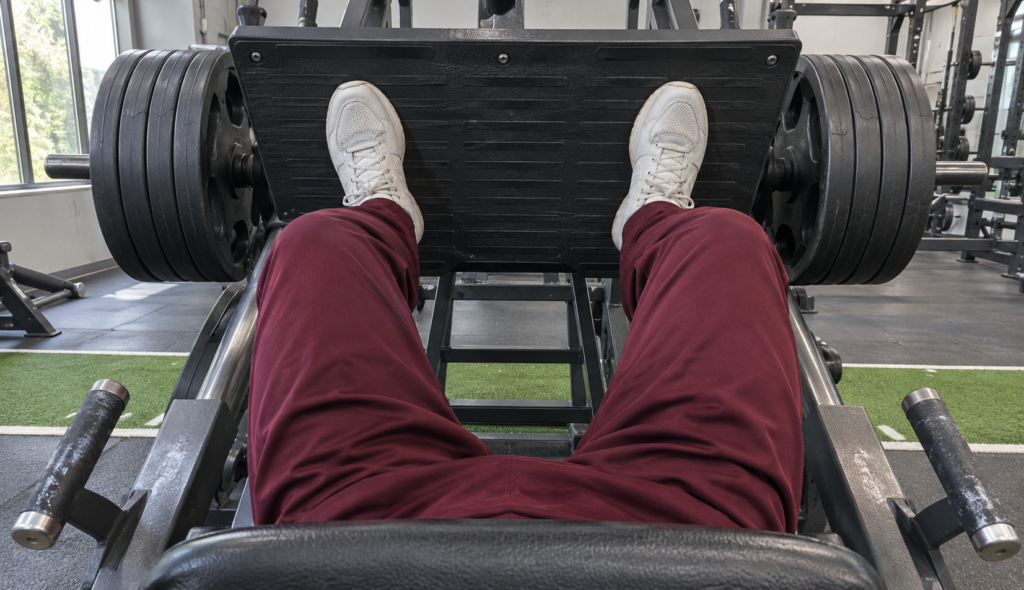
Leg day trains your quads, hamstrings, glutes, and calves. Many people add core work here as well.
- Squat
- Romanian deadlift
- Leg press
- Leg curls
- Standing calf raises
Do not skip this session. Your legs hold the largest muscles in your body, and training them builds strength that carries over to every other lift. A balanced leg day pairs a squat pattern, a hip hinge, and some isolation work for the hamstrings and calves.
How to Schedule a Push Pull Legs Split
The Six-Day PPL Schedule
The classic version runs push, pull, legs, push, pull, legs, then one rest day. Every muscle gets trained twice a week, which makes this the best option for muscle growth if you can recover from it. It does demand about six hours a week, plus good sleep and food to support the workload.
The Three-Day PPL Schedule
If six days is too much, run push, pull, and legs once each, with a rest day between sessions, such as Monday, Wednesday, and Friday. Each muscle is trained once a week, so progress is slower, but the schedule fits busy lives and works well for beginners.
What About Rest Days?
A rest day is where the growth actually happens. Muscles grow while you recover, not while you train. On a six-day split, your single rest day is not optional. Many lifters also take an extra rest day mid-week if they feel run down.
Sample Push Pull Legs Workout Plan
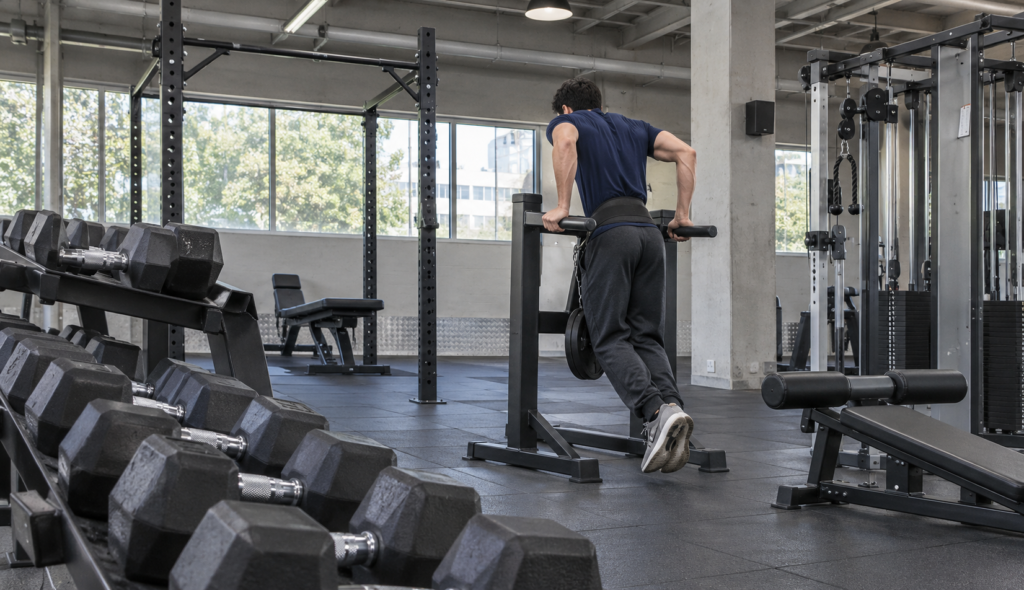
Here is a simple plan you can follow. Do each session twice per week for the six-day version, or once for the three-day version.
Push Day Workout
- Bench press: 3 sets of 5 to 8 reps
- Overhead press: 3 sets of 6 to 10 reps
- Incline dumbbell press: 3 sets of 8 to 12 reps
- Lateral raises: 3 sets of 12 to 15 reps
- Triceps pushdowns: 3 sets of 10 to 15 reps
Pull Day Workout
- Barbell row: 3 sets of 6 to 10 reps
- Pull-ups or lat pulldowns: 3 sets of 6 to 12 reps
- Seated cable row: 3 sets of 8 to 12 reps
- Face pulls: 3 sets of 12 to 15 reps
- Dumbbell curls: 3 sets of 10 to 15 reps
Leg Day Workout
- Squat: 3 sets of 5 to 8 reps
- Romanian deadlift: 3 sets of 8 to 10 reps
- Leg press: 3 sets of 10 to 12 reps
- Leg curl: 3 sets of 10 to 15 reps
- Calf raise: 4 sets of 10 to 15 reps
How Many Sets and Reps Should You Do?
For compound lifts, 5 to 8 reps works well for building strength, while accessories do better in the 8 to 15 rep range. Aim for roughly 10 to 20 hard sets per muscle group per week. Beginners can start at the low end of that range, because fewer sets are enough to grow when you are new. Rest two to three minutes between heavy compound sets and one to two minutes between accessory sets.
Is Push Pull Legs Good for Beginners?
Yes, with one adjustment. A complete beginner will usually do best on the three-day version, since the body needs time to adapt to lifting. The simple structure makes it easy to learn the main movements, and you can move to six days once your workouts feel comfortable and your recovery is solid.
Intermediate lifters often prefer the six-day split, because the added training volume helps them keep progressing once the early gains slow down. Advanced lifters tend to modify it further, for example with heavy and light versions of each day.
Push Pull Legs vs Upper Lower vs Full Body
No split is the best. They all work when you train hard and recover well. The right choice depends on how many days you can train.
- Full body: Best for two to three days a week. Each session trains everything.
- Upper lower: Best for four days a week. Upper and lower body alternate, so each muscle is trained twice.
- Push pull legs: Best for three or six days a week. It allows more exercises per muscle in each session and more room for training volume.
If you can only train four days, an upper lower split is usually the better fit. If you can train five or six days, PPL is hard to beat.
Common Push Pull Legs Mistakes to Avoid
Skipping leg day. It is easy to let legs slide, but they are half the program. Treat leg day like any other session.
Doing too much on push day. Chest, shoulders, and triceps are all working, so keep total sets sensible instead of stacking ten exercises.
Never adding weight. Repeating the same numbers every week stalls your progress. Log your sessions and aim to beat them.
Ignoring recovery. Six days of lifting only works if you eat enough and sleep well.
How to Keep Making Progress
Progressive overload is the engine behind every good routine. Each week, try to add a rep, a small amount of weight, or an extra set. A one rep max calculator helps you choose working weights as a percentage of your max, and a strength level calculator shows how your lifts compare with others at your bodyweight.
Fuel matters too. A six-day split burns a lot of energy, so use a TDEE calculator to find your daily calorie needs and a protein calculator to set your protein target. Sleep seven to nine hours when you can, and plan a deload week every six to eight weeks, or sooner if your lifts stall and you feel worn down.
Final Thoughts on Push Pull Legs
Push pull legs works because it is simple. Three workouts, clear muscle groups, and a schedule you can flex between three and six days. Pick the version that fits your week, focus on the main lifts, and add weight steadily. Do that consistently and the split will do the rest.