
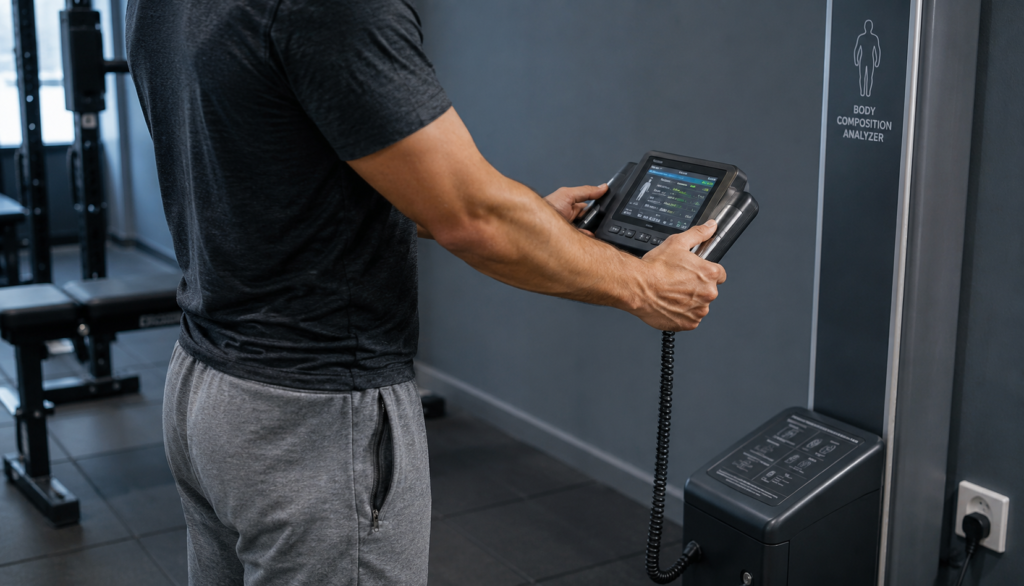
Your body weight tells you almost nothing about your body composition. Two people can weigh exactly the same and look completely different, because weight doesn’t distinguish between fat mass and lean mass. Body fat percentage does. It tells you what portion of your total body weight is fat versus everything else: muscle, bone, organs, and water.
If you’re trying to build muscle, lose fat, or just understand your physique better, body fat percentage is a far more useful number than body weight alone. This guide walks through the most practical ways to calculate it, how accurate each method really is, and how to make sense of your result once you have it.
What Body Fat Percentage Actually Measures
Body fat percentage is the proportion of your total body weight made up of fat tissue. The remainder is called lean body mass, which includes muscle mass, bone density, organ tissue, and water weight. A body fat calculator estimates this split using measurements like skinfold thickness, circumference, or bioelectrical signals, depending on the method.
This is different from body mass index, or BMI, which only compares height and weight. BMI can’t tell the difference between a muscular athlete and someone carrying excess fat, because it doesn’t account for body composition at all. That’s the main reason body fat percentage has become the preferred metric for anyone doing serious strength training or physique tracking.
Why Body Fat Percentage Matters More Than the Scale
The number on a scale reflects total mass, not composition. Someone in a body recomposition phase might gain muscle mass and lose fat mass at the same rate, keeping their weight identical for weeks while their physique visibly changes. Tracking body fat percentage instead of weight alone captures that progress.
It also matters for health. Essential fat is necessary for hormone production, organ protection, and normal bodily function. Falling below essential fat levels is dangerous, while carrying too much visceral fat is linked to metabolic issues. Knowing your body fat percentage puts your weight in context, rather than treating it as a standalone health marker.
Essential Fat vs. Storage Fat
Essential fat is the minimum amount your body needs to function normally, typically around 2-5% for men and 10-13% for women. Storage fat is everything above that baseline, held in adipose tissue as an energy reserve. Most body fat calculators estimate your total, combining both categories into a single percentage.
Methods for Calculating Body Fat Percentage
There’s no single body fat calculator that’s perfectly accurate for everyone. Each method makes tradeoffs between cost, convenience, and precision. Here are the main approaches, ranked roughly by accessibility.
Skinfold Calipers
Skinfold measurements use calipers to pinch and measure subcutaneous fat thickness at several sites on the body, commonly the triceps, abdomen, thigh, chest, and suprailiac area. These measurements are plugged into an equation, such as the Jackson-Pollock formula, to estimate total body fat percentage.
Done correctly by someone experienced, skinfold testing is reasonably accurate and inexpensive. The main downside is technique-dependent error. Inconsistent pinch sites or pressure between sessions can swing your result by several percentage points, which makes it harder to trust for tracking small changes over time.
The U.S. Navy Method
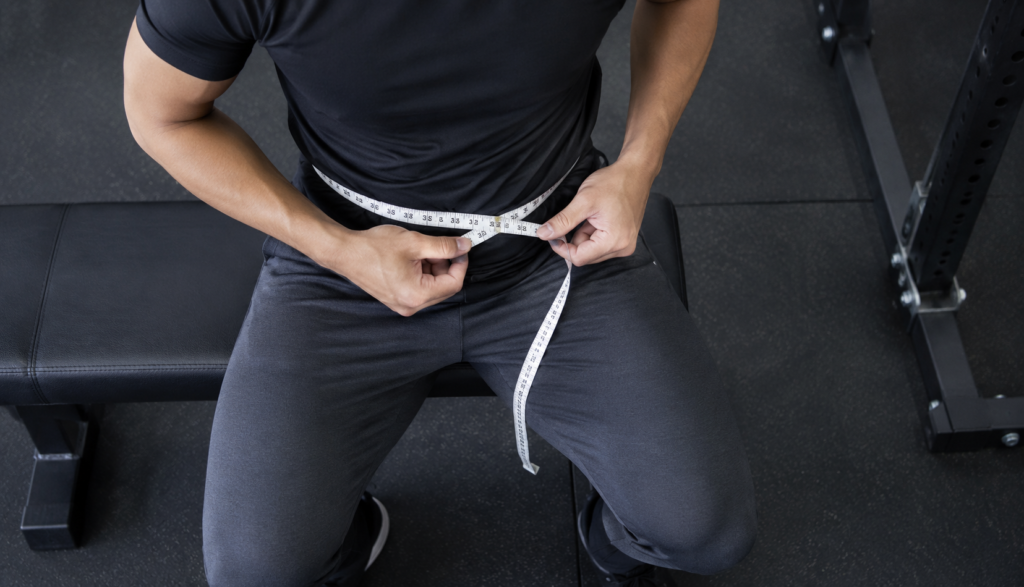
The Navy method uses circumference measurements, typically neck, waist, and hip (for women), fed into a formula to estimate body fat percentage. It requires nothing more than a tape measure, which makes it one of the most accessible ways to get a reasonable estimate at home.
It’s not as precise as lab-based methods, but it’s consistent enough for tracking trends over time, especially if you measure at the same time of day, same sites, and same tape tension each time. This makes it a popular starting point for anyone without access to more advanced tools.
Bioelectrical Impedance Analysis (BIA)
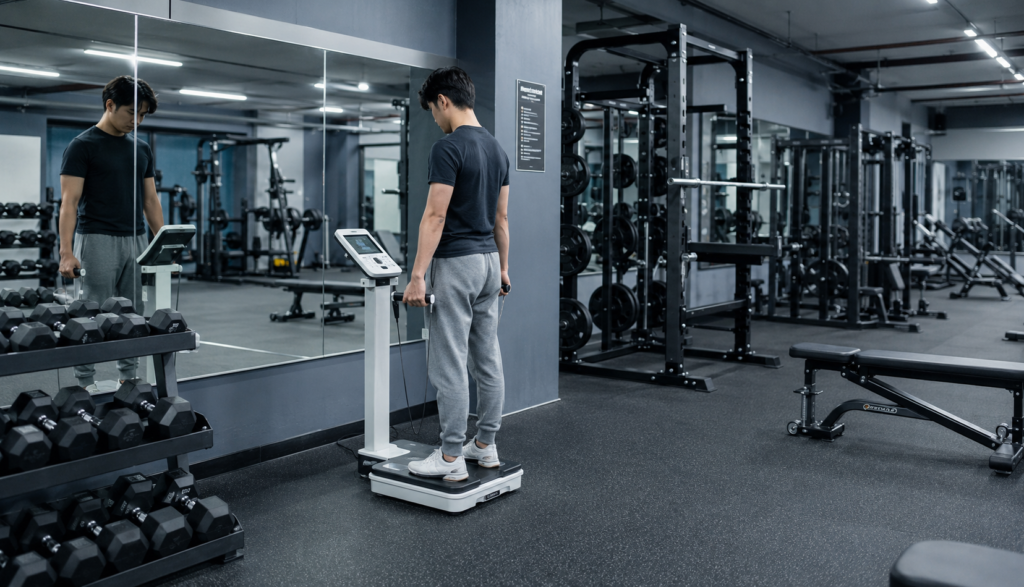
BIA devices, including many bathroom scales and handheld analyzers, send a low-level electrical current through your body and estimate composition based on resistance. Muscle conducts electricity better than fat, so the device calculates body fat percentage from that difference.
BIA is convenient and repeatable, but sensitive to hydration status. Being dehydrated, having just eaten, or exercising beforehand can all skew your reading. For consistent tracking, take your BIA measurement under the same conditions each time, ideally first thing in the morning before food or water.
DEXA Scans
Dual-energy X-ray absorptiometry, or DEXA, is considered one of the gold-standard methods for measuring body composition. It uses low-dose X-rays to distinguish fat mass, lean mass, and bone density with high precision, and can even break results down by body region.
The tradeoff is accessibility. DEXA scans require specialized equipment usually found at medical facilities or dedicated body composition clinics, and they cost more than at-home methods. For most people, a DEXA scan makes sense as an occasional benchmark rather than a regular tracking tool.
Hydrostatic Weighing
Hydrostatic weighing, also called underwater weighing, calculates body density by comparing your weight on land to your weight submerged in water. Since fat is less dense than muscle and bone, this difference allows for a highly accurate body fat percentage estimate.
It’s historically been a research-grade standard, but it requires full submersion and specialized tanks, making it impractical for regular use. Like DEXA, it’s best treated as a periodic accuracy check rather than a weekly habit.
Visual Estimation and Progress Photos
Comparing your physique to reference photos at known body fat percentages is far from scientific, but it’s free and gives a rough sense of where you stand. Combined with a more formal method, progress photos taken under consistent lighting and poses can help confirm whether your calculated number matches what you actually see in the mirror.
How to Get a More Accurate Result
Whichever method you use, consistency matters more than precision. Measure at the same time of day, ideally in the morning before eating or training. Use the same tool, the same measurement sites, and the same technique every time. Small variations in hydration, muscle glycogen, or measurement location can shift your number without any real change in body composition.
It also helps to track trends rather than obsessing over a single reading. A body fat calculator gives you an estimate, not a lab-certified fact. What matters most is whether that estimate is trending down during a fat loss phase or holding steady during a muscle-building phase, not whether it’s off by a point or two from your true value.
Typical Body Fat Percentage Ranges
Healthy and typical ranges differ between men and women due to natural differences in essential fat storage. The table below offers general reference ranges used across most fitness and health contexts.
| Category | Men | Women |
|---|---|---|
| Essential Fat | 2–5% | 10–13% |
| Athletes | 6–13% | 14–20% |
| Fitness | 14–17% | 21–24% |
| Average | 18–24% | 25–31% |
| Above Average | 25%+ | 32%+ |
These categories are general guidelines, not strict rules. Genetics, age, training history, and where your body naturally stores fat all influence how a given percentage looks on an individual physique. Two people at the same body fat percentage can carry it very differently depending on muscle mass and fat distribution.
Body Fat Percentage and Training Goals
Your body fat percentage should inform how you approach training and nutrition, not just serve as a number to track. Someone at a higher body fat percentage looking to build strength may benefit from a body recomposition approach, building muscle mass while slowly reducing fat mass. Someone already lean who wants to maximize strength gains might prioritize a muscle-building phase with a modest calorie surplus, accepting some fat gain as part of the process.
Pairing your body fat percentage with strength benchmarks, like where you rank on a strength level calculator or how your lifts compare to a one rep max calculator, gives a fuller picture of your progress than tracking either metric alone. Composition and performance tend to move together over time, and watching both keeps your training grounded in more than just the number on the scale.
Limitations to Keep in Mind
No at-home body fat calculator is perfectly precise. Skinfold calipers depend on tester skill. BIA devices are sensitive to hydration. Even the Navy method has a margin of error compared to lab testing. Treat any single reading as an estimate, and lean on the trend over weeks and months rather than reacting to day-to-day fluctuations.
Body composition also changes slowly. Meaningful shifts in body fat percentage typically take weeks of consistent training and nutrition to show up, so measuring more than once every few weeks rarely reveals anything beyond normal daily variation in water weight and glycogen storage.