
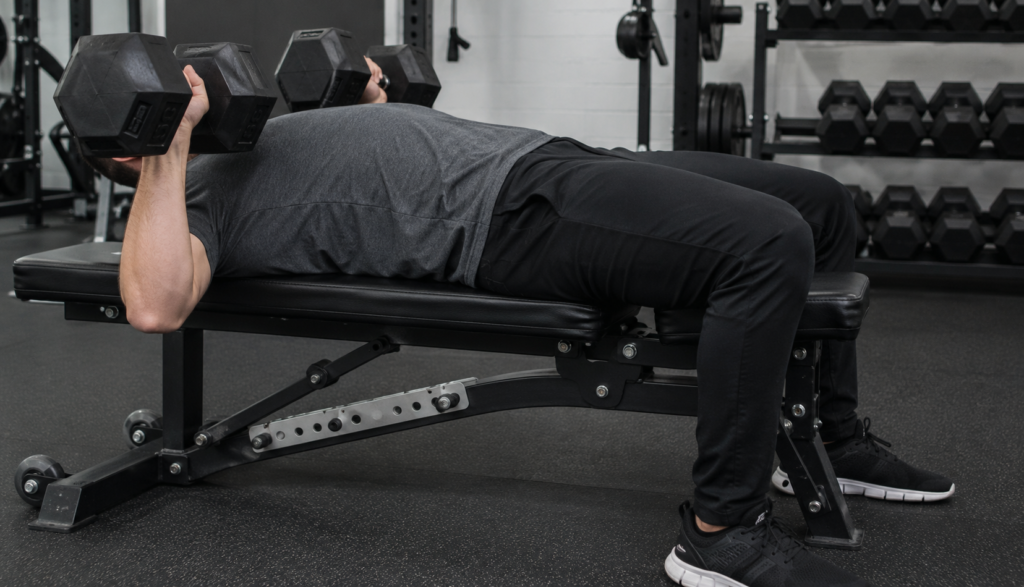
The dumbbell bench press is one of the most beginner-friendly pressing movements in strength training, and for good reason. Unlike the barbell bench press, where both hands are locked to a single bar, dumbbells let each arm move independently. This forces stabilizer muscles to work harder, exposes side-to-side imbalances early, and builds a foundation of shoulder and chest control that carries over well once you move to heavier barbell work.
For someone new to lifting, this makes the dumbbell bench press a smart entry point rather than a lesser alternative. Here’s how to perform it correctly, what mistakes to avoid, and how to build it into a beginner training routine.
Why Beginners Should Start With Dumbbells
New lifters often assume the barbell bench press is the standard starting point, but dumbbells offer several advantages that make them a better choice early on.
Greater Range of Motion
Dumbbells allow the arms to move through a deeper range of motion than a barbell, which is limited by the bar touching the chest. This can lead to better chest activation and more complete muscle development over time.
Reduced Shoulder Strain
Because each arm moves independently, dumbbells allow a more natural pressing path that reduces stress on the shoulder joints compared to the fixed bar path of a barbell.
Exposes Muscle Imbalances Early
If one side is noticeably weaker than the other, a barbell can hide that imbalance since the stronger side compensates. Dumbbells make imbalances obvious immediately, which allows beginners to correct them before they become a bigger issue under heavier barbell loads.
Lower Injury Risk for New Lifters
Without a fixed bar path, there’s less risk of technical breakdown under load, and dumbbells are easier to bail out of safely if a rep is failed, since each arm can be lowered independently rather than being trapped under a barbell.
Proper Dumbbell Bench Press Form
Setup
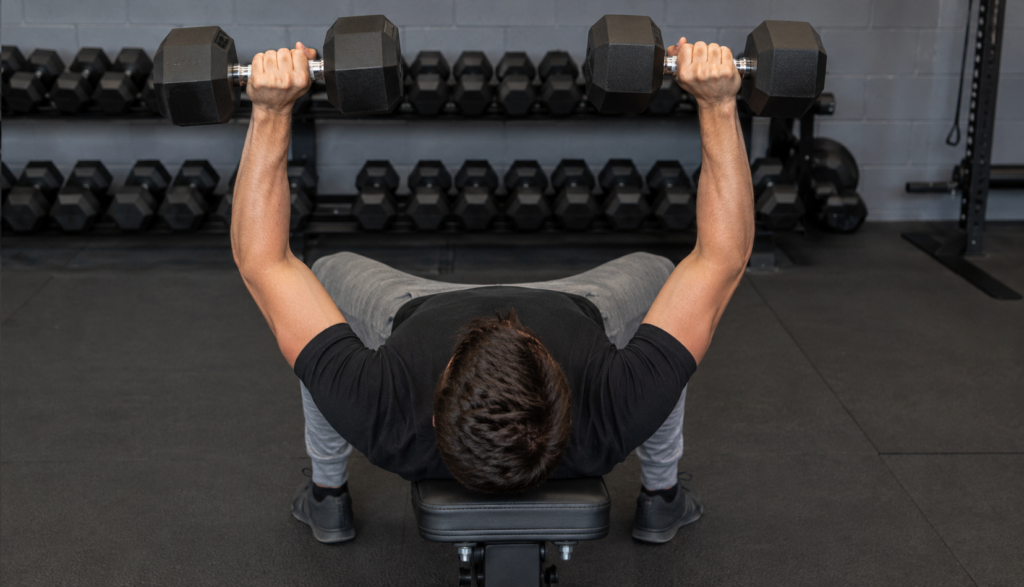
Lie flat on a bench with a dumbbell in each hand, feet planted firmly on the floor. Keep your shoulder blades pulled back and down, creating a stable base to press from. This setup mirrors the same stable arch used in barbell pressing.
Starting Position
Hold the dumbbells at chest level with palms facing forward, elbows bent at roughly 45 to 75 degrees from your torso. Avoid flaring the elbows out to 90 degrees, which places unnecessary stress on the shoulder joints.
The Press
Press both dumbbells upward in a controlled motion until your arms are fully extended, without locking the elbows aggressively. Keep the dumbbells slightly angled inward at the top, rather than clanking them together, to maintain proper shoulder positioning.
The Lowering Phase
Lower the dumbbells slowly and under control until you feel a stretch across the chest, roughly level with your chest or slightly below. Avoid dropping too low, which can place excessive strain on the shoulder joint, especially for beginners still building shoulder stability.
Common Mistakes Beginners Make
Using dumbbells that are too heavy. Since dumbbells demand more stabilization than a barbell, beginners often overestimate the weight they can safely handle, leading to poor form and inconsistent bar path between the two arms.
Flaring the elbows too wide. This shifts stress away from the chest and onto the shoulder joints, increasing injury risk over time, especially with repeated heavy pressing.
Bouncing the dumbbells at the bottom. This reduces control and doesn’t build the strength needed to press from a dead stop, which matters for long-term strength development.
Uneven pressing between arms. Letting one arm lead the movement reinforces the imbalance instead of correcting it. Pressing both dumbbells with equal timing and control is essential for even muscle development.
Skipping a proper warm-up. Jumping straight into working sets without warming up the shoulders and chest increases injury risk and often results in weaker performance during the actual working sets.
How to Program Dumbbell Bench Press as a Beginner
For beginners, the dumbbell bench press works well as either a primary pressing movement or a supporting accessory to barbell training. A simple approach includes:
- 2-3 sets of 8-12 reps for building a foundation of chest and shoulder strength with manageable weight.
- Progressive overload by gradually increasing weight or reps over time, once form is consistent across every set.
- Training frequency of two times per week is generally enough for beginners to build strength without overloading recovery capacity.
As form and confidence improve, beginners can increase weight gradually, always prioritizing full range of motion and even pressing between both arms over simply adding load too quickly.
Dumbbell vs. Barbell Bench Press
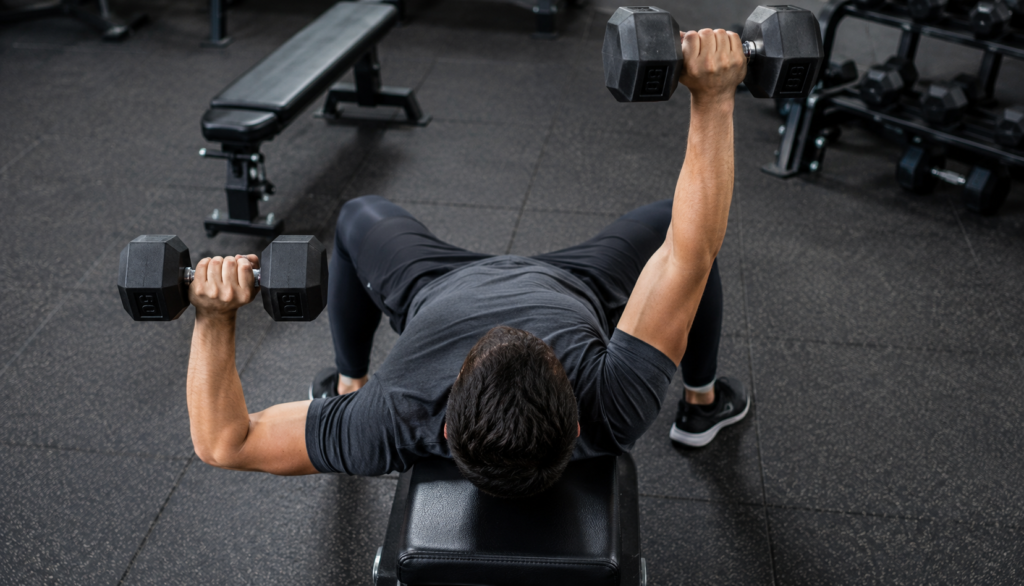
Both movements have a place in a well-rounded training program, but they serve slightly different purposes. The barbell allows heavier total loads and is easier to progressively overload in small increments, making it useful once a lifter has built a solid strength base. The dumbbell version prioritizes stabilizer strength, range of motion, and correcting imbalances, which makes it especially valuable for beginners still developing fundamental pressing mechanics.
Many effective training programs use both, starting new lifters with dumbbells to build a foundation before introducing heavier barbell work later in their training.
Tracking Progress
As strength builds, tracking your working weight and reps over time gives a clear picture of whether your training is producing real progress. Once a beginner has built consistency with the dumbbell bench press, many go on to test their strength on the barbell version, sometimes using a one rep max calculator to estimate their max safely without needing to attempt a heavy single right away.
Final Thoughts
The dumbbell bench press is a smart, low-risk starting point for beginners building pressing strength. It develops stabilizer muscles, corrects imbalances early, and builds the shoulder control needed for long-term progress, including eventually moving to heavier barbell training. Focusing on proper form, consistent programming, and steady progressive overload will build a strong foundation that pays off well beyond the beginner stage.