
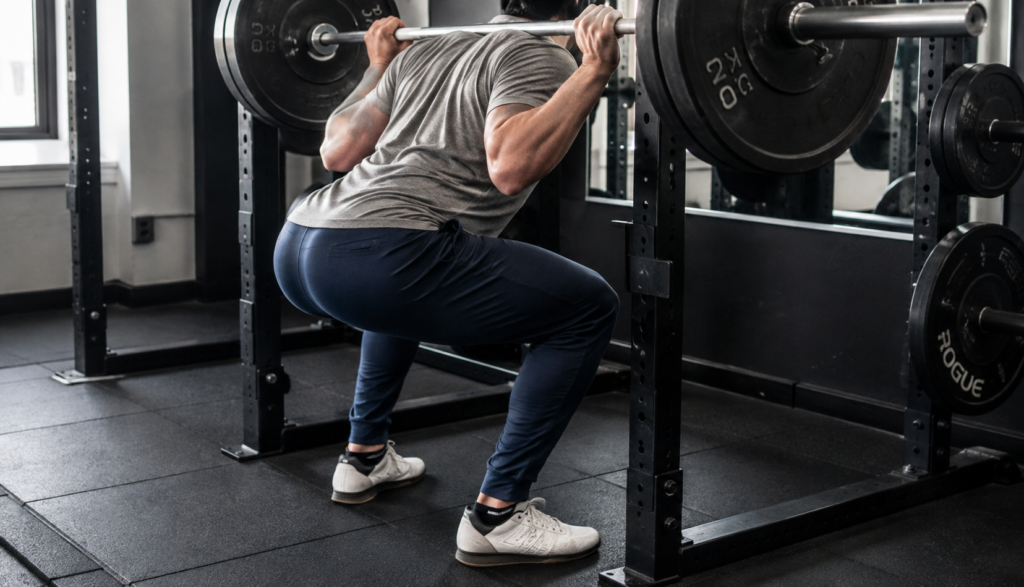
There’s no single “good” squat number. A 140-pound lifter and a 240-pound lifter shouldn’t be chasing the same barbell weight, and someone six months into training shouldn’t expect to move like someone six years in. The useful way to answer this is with a bodyweight ratio: squat weight divided by your bodyweight. That ratio tells you where you stand relative to lifters your size, regardless of whether you’re small, tall, heavy, or light.
This guide breaks squat strength standards down by training age and sex, using bodyweight ratios you can apply to yourself in under a minute. If you want an instant readout instead of doing the math by hand, CalcLifting’s strength level calculator will place your squat against these same standards automatically.
It’s worth being clear about why bodyweight ratios work better than a flat number in the first place. A 400-pound squat sounds impressive on its own, but it means something very different coming from a 320-pound lifter than from a 165-pound lifter. Ratios strip out bodyweight as a variable and let you compare strength relative to the mass you’re actually moving — which is a fairer read on how strong you are, not just how much you happen to weigh.
Squat Standards by Bodyweight Ratio
These ratios apply to a full-depth back squat — hips at or below parallel, controlled tempo, no bouncing out of the hole. Partial-range squats inflate the number and aren’t comparable to these standards.
Standards for Men
| Training Level | Squat-to-Bodyweight Ratio | Example (180 lb lifter) |
|---|---|---|
| Untrained | 0.50–0.75× | 90–135 lb |
| Novice | ~1.0× | ~180 lb |
| Intermediate | ~1.5× | ~270 lb |
| Advanced | ~2.0× | ~360 lb |
| Elite | 2.5×+ | 450 lb+ |
Standards for Women
| Training Level | Squat-to-Bodyweight Ratio | Example (140 lb lifter) |
|---|---|---|
| Untrained | ~0.5× | ~70 lb |
| Novice | ~0.75× | ~105 lb |
| Intermediate | ~1.25× | ~175 lb |
| Advanced | ~1.75× | ~245 lb |
| Elite | 2.0×+ | 280 lb+ |
The gap between men’s and women’s ratios reflects average differences in muscle mass distribution and typical training history, not a ceiling on what any individual woman can lift. Plenty of experienced female lifters sit well above the “advanced” ratio here.
It also helps to sanity-check these numbers against real-world reference points. A 180-pound man squatting 270 pounds for a working set isn’t putting up a competition-level number, but he’d be noticeably stronger than the average person who walks into a gym — strong enough that most casual lifters around him would clock it as a serious squat. That’s the practical read on “intermediate”: solid, visible progress, but still real room to grow before hitting advanced territory.
What “Training Level” Actually Means
These labels get thrown around loosely, so here’s what separates them in practice:
Untrained
No structured squat training. This is roughly what an athletic person can do the first time they load a bar with reasonable form, relying on general fitness rather than squat-specific strength.
Novice
Around three to six months of consistent squatting, two or more sessions a week, with progressive overload. Strength gains at this stage are fast — largely nervous system adaptation rather than added muscle.
Intermediate
One to two years of consistent training. Progress slows and requires actual programming — you can’t just add five pounds every session anymore. This is where most dedicated lifters who train regularly but don’t compete tend to land.
Advanced
Multiple years of structured programming, often with periodization and dedicated peaking phases. Reaching this level usually means training has become a serious, consistent priority.
Elite
Competitive powerlifting territory — the kind of numbers that place well in local or regional meets. Getting here typically means years of focused training under a program built around progressive overload principles.
Factors That Shift the Numbers
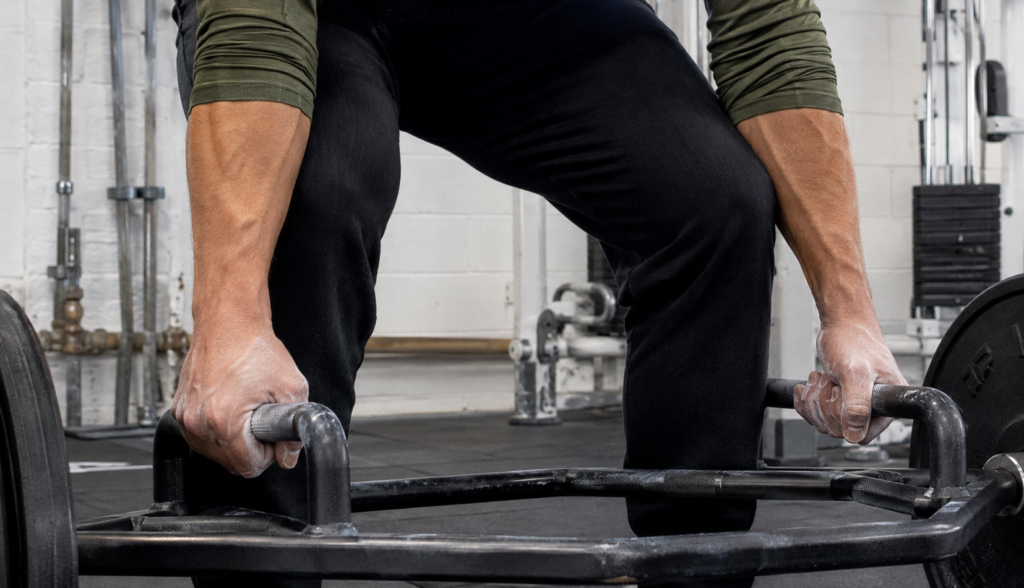
Bodyweight ratios are a useful anchor, but several things move an individual’s realistic number up or down from the table:
Body Proportions
Shorter femurs and a longer torso are mechanically favorable for squatting — less distance to travel, less forward lean needed to stay balanced. Someone with long legs and a short torso will often need more relative strength to hit the same ratio as someone built the other way. This is about leverage, not effort or technique.
Bodyweight Itself
Ratios tend to drop slightly as bodyweight climbs. Heavier lifters carry more mass to move but don’t gain squat strength in a perfectly linear line with bodyweight, so a 250-pound lifter at “advanced” level typically posts a lower ratio than a 150-pound lifter at the same relative level.
Age
These standards assume a lifter in their 20s to mid-30s. Natural strength trends downward gradually through the 30s and 40s, with a more noticeable drop after 50 without consistent resistance training. Age-adjusted standards exist, but the core principle — track your own progress against your own history — matters more than chasing a table built for a 25-year-old.
Training History
A lifter returning to squatting after a long layoff often has “muscle memory” that lets them regain lost strength faster than a true beginner builds it the first time. Someone coming from another strength sport — sprinting, gymnastics, competitive lifting in a different discipline — may also progress faster than these general standards suggest.
Squat Depth and Form
A squat that stops above parallel is a different exercise from a full-depth squat, strength-wise. Standards built on full range of motion don’t transfer to a partial squat number, and comparing the two overstates where a lifter actually stands.
Bar Position and Squat Style
High-bar and low-bar back squats load the hips and knees differently, and low-bar squats typically allow slightly more weight to be moved due to the shorter effective range of motion and more favorable leverage for many lifters. Front squats, by contrast, usually move noticeably less weight than either back squat variation because of the more upright torso position and core demand. None of these standards distinguish between styles, so it’s worth comparing your number against the specific variation you actually train, not just “squat” as a generic category.
How to Use These Standards
The most useful application isn’t chasing a specific label — it’s tracking your own ratio over time. Calculate your current squat-to-bodyweight ratio, note where it falls, and revisit it every few months as your training progresses. Progressive overload, applied consistently, is what moves you from one tier to the next; there’s no shortcut around time under the bar.
If your goal is a fast, accurate read on where you stand without doing the math by hand, plug your numbers into CalcLifting’s strength level calculator or one rep max calculator — both are built around the same bodyweight-ratio logic used here.
It’s also worth testing your squat max periodically rather than guessing at it. Estimating your one rep max from a higher-rep set is safer for most lifters than grinding out a true single, and it’s usually accurate enough to track your ratio over time without the added fatigue and injury risk of a true max attempt every few months.
Squat Standards vs. Other Major Lifts
Squat, bench press, and deadlift standards aren’t interchangeable — each lift has its own typical ratio because of the muscle groups and leverage involved. A deadlift ratio is usually higher than a squat ratio at the same training level, since it recruits more total muscle mass and involves less technical balance. A bench press ratio sits well below both, since upper-body pressing strength typically lags lower-body and hip-hinge strength. If you’re building a full picture of your strength profile, it’s worth checking standards for each lift individually rather than assuming they scale the same way.
Common Mistakes When Comparing Squat Numbers
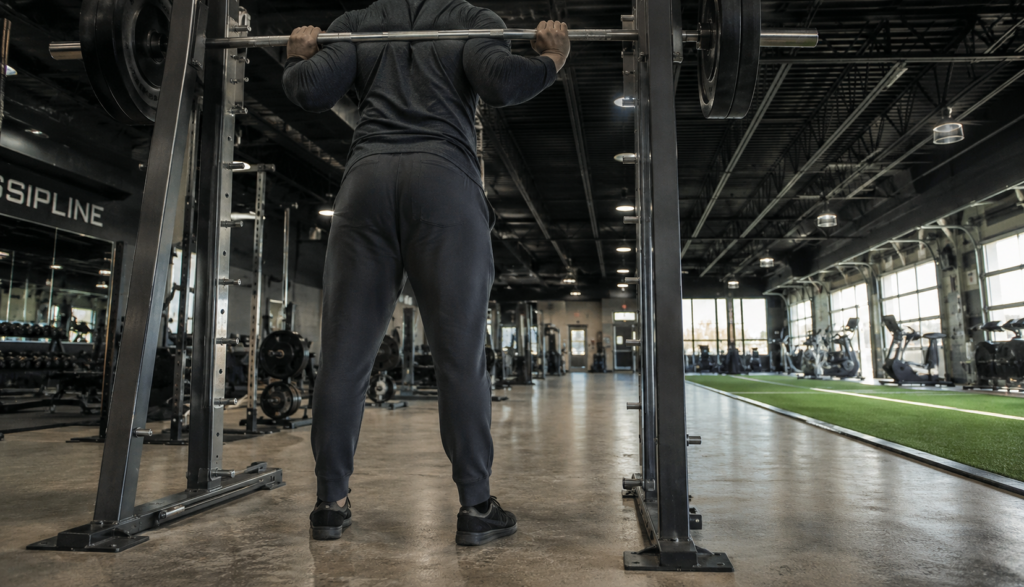
A few habits consistently distort how lifters read their own squat standard, worth flagging before you compare yourself against the tables above.
Comparing Against Outliers, Not Averages
Social media and gym anecdotes skew toward the most impressive numbers in the room, not the typical ones. Someone posting a 500-pound squat online represents the elite tail of the distribution, not a realistic benchmark for where most consistent lifters land after a similar amount of training time.
Ignoring Rep Range When Comparing Maxes
A five-rep squat and a true one-rep max aren’t the same number, even from the same lifter on the same day. Converting a multi-rep set to an estimated max using a standard formula gives a much fairer comparison against the standards here than treating a heavy set of five as if it were a single.
Skipping the Warm-Up Before Testing
A cold attempt at a heavy squat, without a proper progressive warm-up, tends to undershoot true capacity and can also raise injury risk. Testing a max or near-max squat is worth doing only after a full warm-up building up in weight, not as the first heavy set of the session.
The Bottom Line
“How much should I squat” doesn’t have a universal answer, but “how does my squat compare to lifters my size and training age” does. Use the bodyweight ratio tables above as your baseline, account for your own proportions and training history, and track your ratio over time rather than fixating on a single number. Consistent progressive overload is what actually closes the gap between tiers — not any one training trick or program.