

Lowering your body fat percentage is one of the most common fitness goals, but it’s also one of the most misunderstood. Many people focus only on the number on the scale, when body fat percentage — the proportion of your total weight that comes from fat versus lean mass — is a far more accurate marker of body composition and progress. Someone can lose weight while barely changing their body fat percentage if they lose muscle along with fat. The goal isn’t just to weigh less; it’s to shift the ratio between fat mass and lean mass in your favor.
This guide walks through the core principles behind lowering body fat percentage sustainably: creating the right calorie deficit, structuring your training to preserve muscle, adjusting your diet composition, and building habits that hold up over time. If you want to see where you currently stand, a body fat calculator can give you a starting estimate before you begin tracking changes.
What Body Fat Percentage Actually Measures
Body fat percentage represents the portion of your body weight that is fat tissue, with the remainder classified as lean body mass — muscle, bone, organs, and water. Two people can weigh the same amount and look completely different because one carries more lean mass and the other carries more fat mass. This is why body fat percentage is a more useful measurement for tracking real physique change than body weight alone.
Healthy body fat ranges vary by sex, age, and activity level. Men often sit in a healthy range between roughly 10–20%, while women typically range from about 18–28%, though athletes and lifters frequently fall below these averages. There’s no single “ideal” number — the right target depends on your goals, whether that’s general health, aesthetic preference, or athletic performance.
The Foundation: A Sustainable Calorie Deficit
Fat loss, at its core, requires burning more energy than you consume — a calorie deficit. This is the non-negotiable foundation of lowering body fat percentage. Without a deficit, no combination of exercise, supplements, or meal timing will meaningfully reduce fat mass.
That said, how you create the deficit matters. A deficit that’s too aggressive increases the risk of muscle loss, fatigue, hormonal disruption, and rebound weight gain. A moderate deficit of roughly 10–20% below maintenance calories is generally more sustainable and better preserves lean mass than an extreme cut. This typically translates to losing about 0.5–1% of body weight per week for most people.
Why Aggressive Cuts Backfire
Severe calorie restriction often triggers adaptive responses: metabolism slows, hunger hormones increase, energy for training drops, and the body becomes more likely to break down muscle tissue for fuel. This is counterproductive for lowering body fat percentage specifically, since losing muscle alongside fat can leave the ratio largely unchanged even as the scale drops.

Prioritize Protein and Resistance Training
The single most important lever for preserving — or even building — lean mass during a fat loss phase is resistance training combined with adequate protein intake. Strength training signals your body to hold onto muscle even in a calorie deficit, while a low-protein diet in a deficit accelerates muscle breakdown.
Most research supports a protein intake of roughly 0.7–1 gram per pound of body weight during fat loss phases, higher than what’s typically recommended for weight maintenance. Combine this with a structured strength training program — ideally training each major muscle group two to three times per week — to send a strong enough stimulus for muscle retention.
Compound Lifts Do the Heavy Lifting
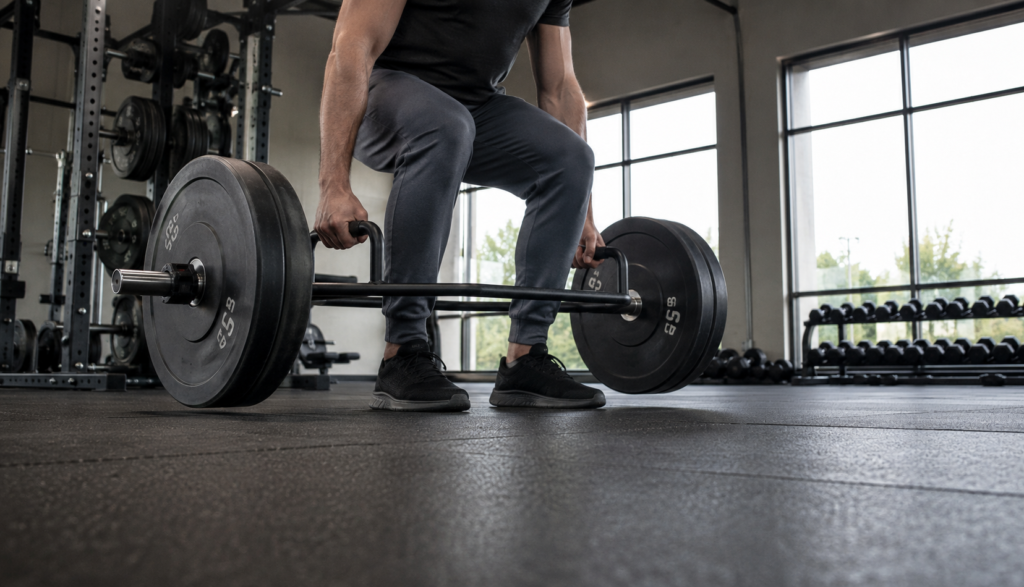
Compound movements like squats, deadlifts, presses, and rows recruit the most muscle mass per session and provide the strongest stimulus for maintaining strength during a deficit. A program built around these lifts, with progressive overload tracked over time, tends to outperform isolation-heavy routines for body recomposition purposes.
Where Cardio Fits In
Cardiovascular exercise supports fat loss by increasing total energy expenditure, but it isn’t a replacement for resistance training or diet — it’s a supplement to both. Steady-state cardio and interval-style conditioning both have a place, and the right amount depends on your recovery capacity and how much of your energy budget you can dedicate to it without compromising strength training.
A useful approach is to increase daily non-exercise movement — walking, taking stairs, standing more — before adding large volumes of structured cardio. This is sometimes called NEAT (non-exercise activity thermogenesis), and it can meaningfully affect total daily energy expenditure without adding training fatigue.
Sleep and Stress: The Overlooked Variables
Poor sleep and chronic stress both interfere with fat loss, largely through their effects on hunger regulation, cortisol, and recovery capacity. Inadequate sleep is associated with increased appetite, reduced training performance, and a greater tendency to lose lean mass rather than fat mass during a deficit.
Aiming for consistent sleep of seven to nine hours per night and managing chronic stress through recovery practices isn’t a minor add-on — it’s a structural part of any plan to lower body fat percentage effectively.
Tracking Progress the Right Way
Because body fat percentage can’t be measured perfectly outside a lab setting, it’s best tracked as a trend rather than a single precise number. Methods like skinfold calipers, bioelectrical impedance scales, or the U.S. Navy tape method all have margins of error, but used consistently — same method, same conditions, same time of day — they can reveal meaningful trends over weeks and months.
Progress photos, how clothes fit, and strength trends in the gym are useful supporting indicators alongside any body fat percentage estimate. Relying on a single data point in isolation can be misleading; looking at the overall trend across several data types gives a clearer picture of body recomposition progress.
Common Mistakes That Stall Fat Loss
- Cutting calories too aggressively, which risks muscle loss and metabolic slowdown
- Skipping resistance training in favor of cardio alone, which fails to preserve lean mass
- Under-eating protein, especially during a deficit
- Chasing the scale instead of tracking body composition trends
- Expecting linear progress — fat loss naturally fluctuates week to week due to water retention and other factors
Building a Sustainable Long-Term Approach
Lowering body fat percentage isn’t a short-term project — it’s the result of consistent habits maintained over months. A moderate calorie deficit, resistance training with progressive overload, adequate protein, sufficient sleep, and patience with the process are the pillars that hold up regardless of which specific diet or training style you follow.
Pairing consistent training with a body fat calculator to check in periodically can help you see whether your current approach is working, without obsessing over daily fluctuations. The goal is steady movement toward your target range, not perfection on any single day.