
A muscle strain happens when fibers get stretched or torn past what they can handle, usually during a sudden load, an awkward rep, or a movement your body wasn’t ready for. Recovery time depends almost entirely on how severe the strain is, which muscle group is involved, and how it’s managed in the first few days. Some strains resolve in a week. Others take two months or longer.
This guide breaks down healing timelines by strain grade, what’s actually happening in the tissue at each stage, and how to know when it’s safe to load the muscle again.
What a Muscle Strain Actually Is
A strain is damage to muscle fibers or the tendon that connects muscle to bone. It’s different from a muscle tear in degree rather than in kind — a severe strain and a tear describe the same injury spectrum, just at different points. Strains commonly happen in muscles that cross two joints and work eccentrically under load: hamstrings, calves, and the lower back are the most frequent sites, though strains can occur in almost any muscle group during heavy lifting, sprinting, or an unfamiliar movement pattern.
The injury triggers an inflammatory response almost immediately. Blood flow increases to the area, swelling begins, and the nervous system limits how much force the muscle can produce — which is why a strained muscle often feels “shut off” rather than just sore.
Recovery Time by Strain Grade
Muscle strains are classified into three grades based on how much tissue is damaged. Grade determines almost everything about the recovery timeline.
Grade I Strain (Mild)
A small number of fibers are overstretched or micro-torn. There’s mild discomfort, minor loss of strength, and little to no bruising. Most Grade I strains recover in 7 to 14 days with basic care. Light movement and gradual reloading typically speed things up compared to full rest.
Grade II Strain (Moderate)
A partial tear with noticeable fiber damage. Expect visible swelling, some bruising within a few days, a clear strength deficit, and pain with contraction or stretch. Grade II strains generally take 3 to 8 weeks to heal, depending on the muscle involved and how well the early rehab phase is managed. Hamstring and calf strains at this grade tend to sit toward the longer end of that range because those muscles are under near-constant low-level tension during daily movement.
Grade III Strain (Severe)
A complete or near-complete tear, sometimes with a palpable gap in the muscle. Bruising is usually significant, and there’s substantial or total loss of function in the muscle. Grade III strains can take 3 months or longer, and some cases involve a structural tear that benefits from imaging and a sports medicine evaluation before a rehab plan is built. This grade is where self-management alone isn’t enough — professional assessment matters.
The Three Phases of Muscle Healing
Regardless of grade, muscle tissue repairs itself in three overlapping phases. Understanding them helps explain why rushing recovery backfires.
Inflammatory Phase (Days 1–5)
The body clears damaged tissue and begins laying down the foundation for repair. Swelling, warmth, and pain are expected here — this phase isn’t something to fight, it’s something to manage. Overly aggressive stretching or loading during this window can worsen the injury.
Repair Phase (Days 5–21)
New tissue starts forming to bridge the damaged area. This is where light, controlled movement becomes useful — it helps new fibers align in a functional pattern rather than forming disorganized scar tissue. This is also when most people are tempted to return to full training too early, which is a common cause of re-injury.
Remodeling Phase (Weeks 3–8+)
The new tissue matures and gradually regains strength and elasticity. Full contractile capacity often lags behind how the muscle feels — a strain can feel fully healed weeks before it can actually tolerate maximal load again, which is why grade-based timelines exist in the first place.
Factors That Slow Down Recovery
Two people with the same grade of strain can heal at very different speeds. A few factors consistently extend recovery time:
Returning to load too early. Re-straining a healing muscle is one of the most common ways a short recovery turns into a long one, and repeat strains in the same muscle tend to heal slower each time.
Poor blood supply to the area. Some muscle regions, particularly certain points in the hamstring, have less local blood flow, which slows the repair phase.
Inadequate protein intake. Muscle repair is a protein-demanding process, and chronically low intake during recovery can measurably slow tissue rebuilding.
Poor sleep. Most tissue repair and growth hormone release happens during deep sleep, so cutting sleep short during recovery directly extends healing time.
Skipping the rehab phase entirely. Resting until pain disappears, then jumping straight back into full training, skips the progressive reloading that rebuilds tensile strength and leaves the area more vulnerable to re-injury.
How to Support Recovery
In the first 48–72 hours, standard care applies: relative rest, ice for swelling control, gentle compression if appropriate, and elevation for lower-body strains. After the acute phase, the priority shifts to controlled movement rather than continued rest.
Light range-of-motion work, gentle isometric holds, and gradually increasing load over days and weeks help the muscle rebuild functional strength instead of just filling the gap with stiff scar tissue. Adequate protein intake and consistent sleep both play a measurable role here — they’re not optional extras, they’re part of the mechanism.
If you’re tracking recovery nutrition, a protein calculator can help make sure intake matches what tissue repair actually requires during this window.
Signs You’re Ready to Return to Full Training
A muscle is generally ready for full loading when it has close to full pain-free range of motion, strength that’s back to roughly the same level as the uninjured side, and no pain during movements that mimic the demands of your training. Testing this with light, controlled loading before jumping back into heavy work is the safest way to confirm readiness rather than guessing based on how the area feels at rest.
Rushing this step is the single biggest driver of repeat strains. A muscle that re-strains during rehab almost always takes longer to fully recover than it did the first time.
When to See a Professional
Grade I and mild Grade II strains are usually manageable with self-directed care. See a physical therapist or sports medicine physician if there’s a palpable gap in the muscle, significant loss of function, inability to bear weight or use the limb, or if pain and swelling aren’t improving within the expected timeline for the grade. Grade III strains, in particular, benefit from a professional evaluation before building a return-to-training plan.
Why the Same Grade Can Heal at Different Speeds by Muscle Group
Grade isn’t the only variable — location matters almost as much. Hamstring strains are notorious for lingering longer than a Grade II label would suggest, partly because the hamstring crosses both the hip and knee joints and stays under tension through everyday movement like walking and sitting down, which makes it harder to fully offload during the repair phase. Calf strains tend to heal a bit faster at the same grade because the muscle is easier to rest without limiting daily function. Lower back strains sit somewhere in between — the muscle group is smaller, but the region is difficult to fully immobilize, and poor posture during recovery can quietly re-aggravate the injury without an obvious re-injury moment.
This is one reason two athletes with what looks like the same injury on paper end up with very different recovery timelines. The grading system is a useful starting point, but the specific muscle group, its role in daily movement, and how well it can actually be offloaded all shift the timeline in either direction.
Training Around a Strain Without Losing Progress
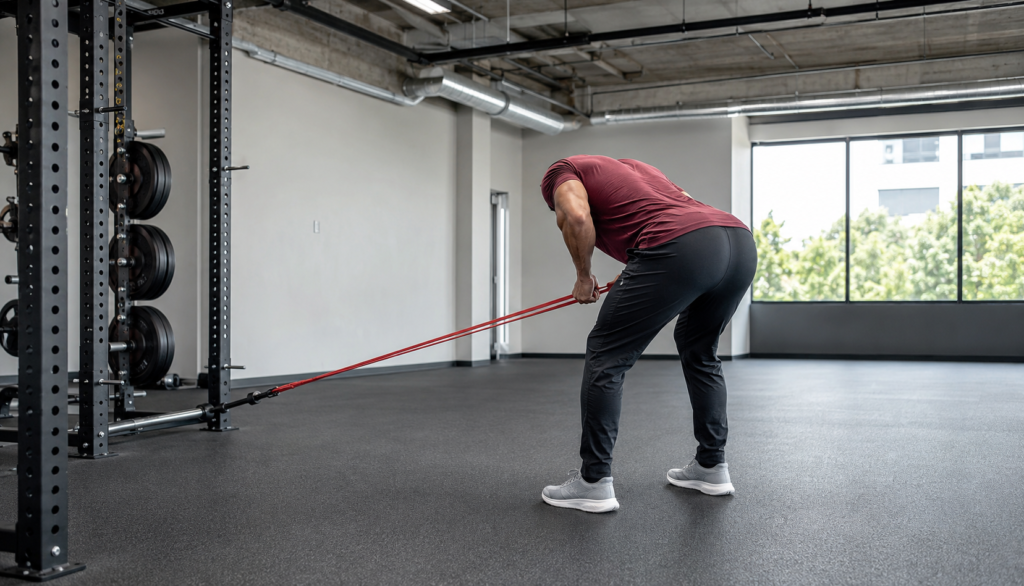
A strain in one muscle group doesn’t mean total training has to stop. Continuing to train unaffected muscle groups — upper body work during a hamstring strain, for example — helps preserve overall conditioning and can even support recovery by maintaining blood flow and hormonal signaling that supports tissue repair elsewhere in the body. The key is making sure the injured area isn’t indirectly loaded through compensatory movement patterns, which is a common way a strain in one muscle leads to compensatory strain in another.
Cardiovascular work is often adjustable too. Cycling or swimming may be tolerable for a hamstring or calf strain well before running is, since the loading pattern is lower-impact and easier to control. Checking movements against pain and strength thresholds — rather than avoiding all activity outright — tends to produce a faster, more complete return to training than total rest followed by an abrupt jump back to full intensity.